
1. Executive Summary
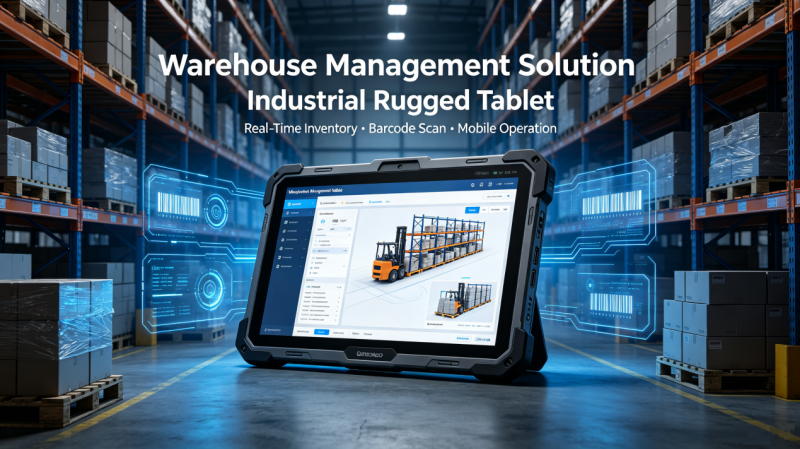
This compact solution delivers an industrial rugged tablet-based smart warehouse management system for manufacturing and logistics warehouses. Replacing error-prone paper workflows and fragile consumer devices, our industrial tablets act as mobile field terminals to digitalize full WMS processes including inbound, storage, inventory checking, picking and outbound. The solution eliminates data delays and manual errors, standardizes on-site operations, and improves overall warehouse efficiency and inventory accuracy.
2. Warehouse Pain Points
Traditional warehouse operations face typical bottlenecks that restrict supply chain efficiency:
•Paper-based operation: Manual recording causes data lag, document loss and unsynchronized inventory data.
•High error rate: Manual counting and entry easily lead to inventory discrepancy and delivery mistakes.
•Unstable consumer devices: Ordinary tablets cannot resist dust, low temperature, vibration and drops in harsh warehouse environments.
•Disconnected processes: Scattered on-site tasks result in untraceable operations and difficult quality control.
•Low inventory efficiency: Full manual stocktaking is time-consuming and affects daily inbound/outbound workflows.
3. Solution Overview
This solution adopts rugged industrial tablets as mobile intelligent terminals, connecting with enterprise WMS/ERP/MES systems. It integrates barcode/QR scanning, real-time data synchronization and mobile on-site operation capabilities. The core value is to migrate backend warehouse management functions to the field, realizing one-click data collection, verification and upload, and building a closed-loop digital warehouse management system.
4. Industrial Tablet Core Advantages
Optimized exclusively for high-intensity warehouse scenarios:
•Industrial rugged design: IP65/IP67 dustproof & waterproof, drop and vibration resistant, working stably from -20℃ to 60℃, suitable for normal warehouses and cold storage.
•High-speed scanning engine: Built-in 1D/2D scanner, supporting fast recognition of worn, fuzzy and low-light barcodes and QR codes.
•Full-network connectivity: Stable Wi-Fi/4G/5G/Bluetooth connection to ensure real-time data synchronization even with shelf signal shielding.
•Long-lasting & hot-swappable battery: Supports all-day continuous operation; hot-swap design guarantees non-stop field work.
•Anti-glare glove touch screen: Clear display under strong light and support for gloved operation for on-site worker convenience.
•Rich expandable interfaces: Compatible with RFID readers, portable printers and scanners to meet customized warehouse needs.
5. Core Application Scenarios
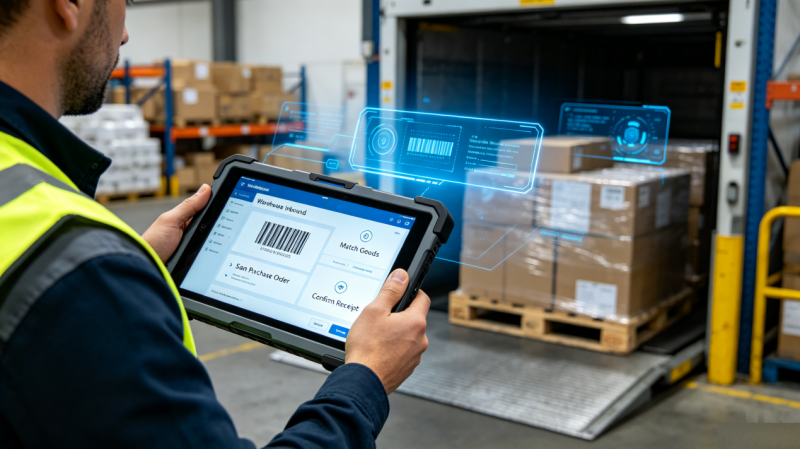
5.1 Warehouse Inbound Management
Case Image Description: On-site application photo — Warehouse staff hold industrial tablets at the receiving dock, scanning pallet barcodes and purchase order codes to complete intelligent inbound inspection and shelf allocation.
Tablets verify delivered goods by matching on-site scan data with backend purchase orders. Qualified goods are automatically allocated shelf locations. Operators bind cargo and shelf codes on-site, and all data is synced to WMS in real time to avoid wrong receipt and missing receipt.
5.2 Intelligent Inventory Checking
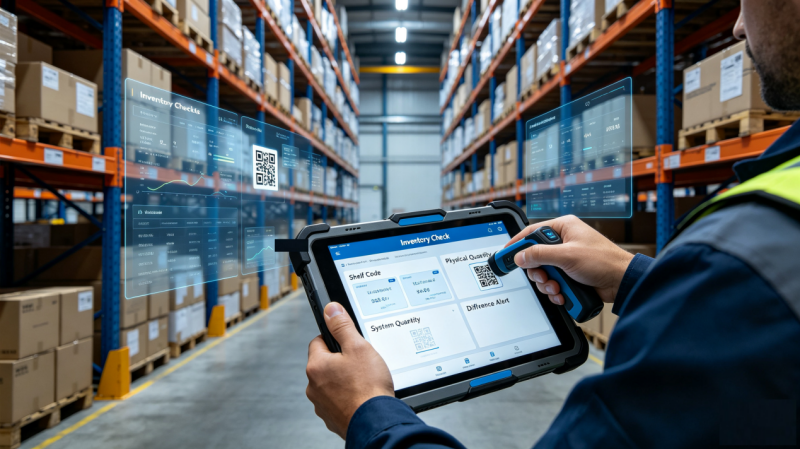
Case Image Description: On-site application photo — Inventory inspectors use industrial tablets to scan shelf codes for fast digital stocktaking, with real-time inventory difference display on the device screen.
Replace traditional paper stocktaking with mobile scanning inventory. The tablet automatically compares physical quantity with system data, generates difference reports instantly, and greatly shortens inventory cycle while ensuring data accuracy.
5.3 Order Picking & Sorting
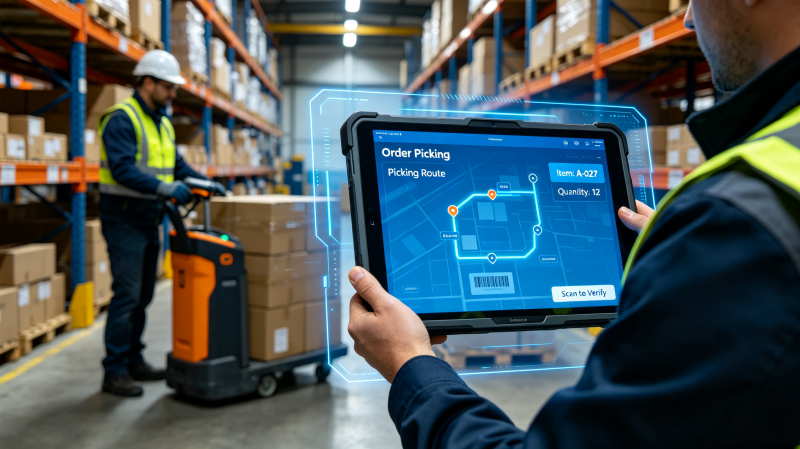
Case Image Description: On-site application photo — Pickers follow tablet intelligent picking routes, complete goods picking and barcode verification to achieve error-free order sorting.
Tablets push real-time picking tasks and optimal walking paths. On-site scanning verification effectively prevents picking errors. The system updates inventory and task progress in real time to improve order fulfillment efficiency.
5.4 Packing & Outbound Management
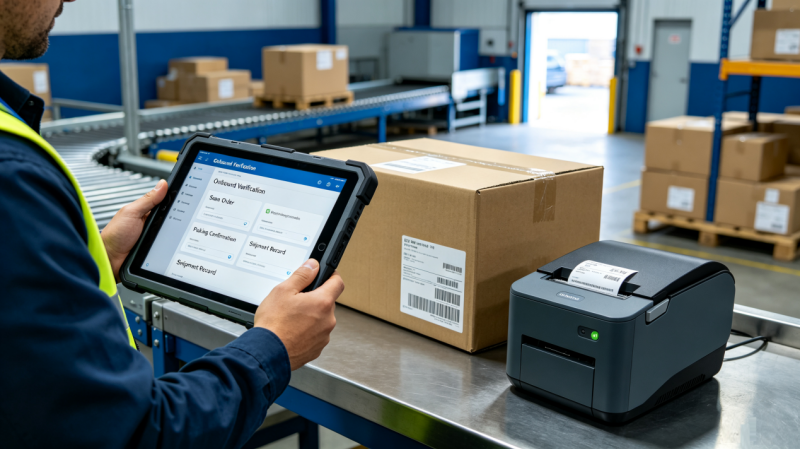
Case Image Description: On-site application photo — Warehouse operators verify packed cartons via industrial tablets at the outbound platform to complete digital shipment confirmation and data archiving.
Before shipment, staff scan order and commodity codes for secondary verification. All outbound records including operator, time and batch information are archived to realize full-process traceability and prevent wrong delivery and missing shipment.
5.5 Inventory Early Warning Management
Case Image Description: On-site application photo — Managers view low-stock alerts and expired goods reminders on industrial tablet terminals during daily warehouse patrols.
The terminal actively pushes low-stock, overstock and validity period early warnings. Warehouse teams can handle abnormal inventory on-site in time to reduce capital occupation and inventory waste.
6. System Deployment Architecture
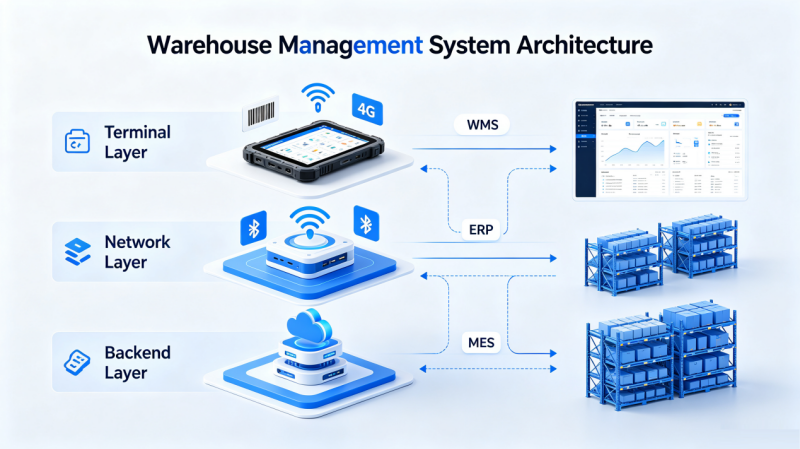
Architecture Diagram Description: The solution adopts a three-layer digital closed-loop architecture: Terminal Layer — Network Transmission Layer — Backend Management Layer.
•Terminal Layer: Industrial tablets deployed on all warehouse posts for on-site data collection and task execution.
•Network Layer: Multi-mode Wi-Fi/4G/5G wireless transmission to ensure stable and real-time data interaction.
•Backend Layer: Connects with WMS/ERP/MES for unified task management, data statistics and intelligent analysis.
7. Solution Value & Benefits
Effect Comparison Image Description: Data comparison chart showing efficiency improvement before and after digital warehouse upgrade, including accuracy rate, labor cost and time cost optimization.
•Higher efficiency: Eliminate paper workflows, shorten single operation time and improve warehouse turnover efficiency.
•High accuracy: Real-time scanning and data synchronization raise inventory accuracy up to 99.9%.
•Cost saving: Reduce manual inventory labor costs and inventory loss caused by data errors.
•Full traceability: Realize full-life-cycle cargo traceability to meet enterprise quality supervision requirements.
•Stable field operation: Industrial rugged design reduces equipment failure rate and long-term maintenance cost.
8. Conclusion
This industrial tablet WMS solution fully digitalizes traditional manual warehouse operations. With reliable industrial hardware and standardized mobile workflows, it optimizes warehouse management processes, eliminates data errors, reduces comprehensive costs, and provides efficient, stable and intelligent digital upgrade solutions for modern warehouses.